



Overview
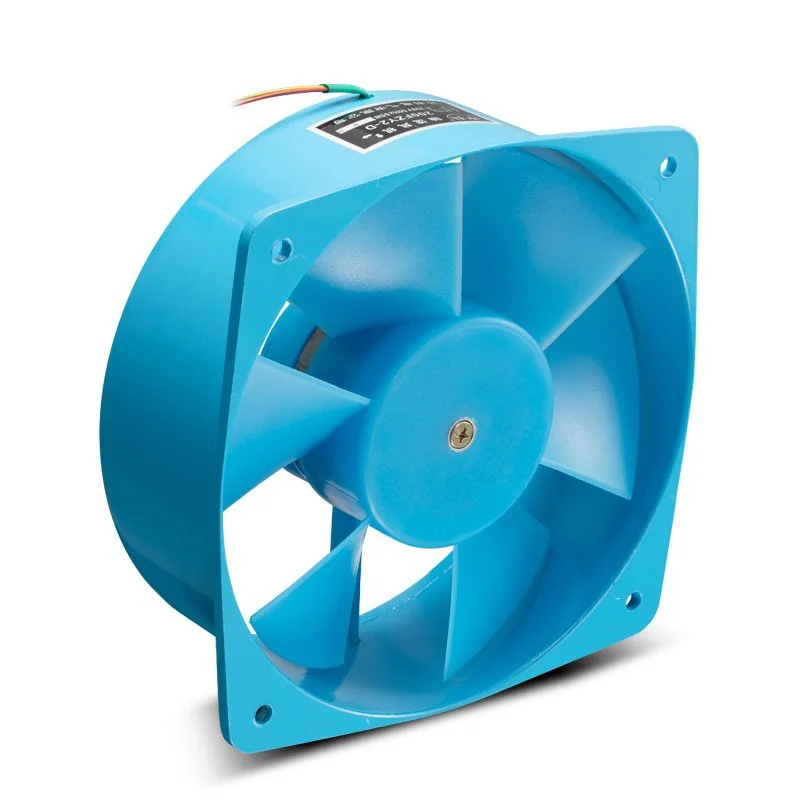
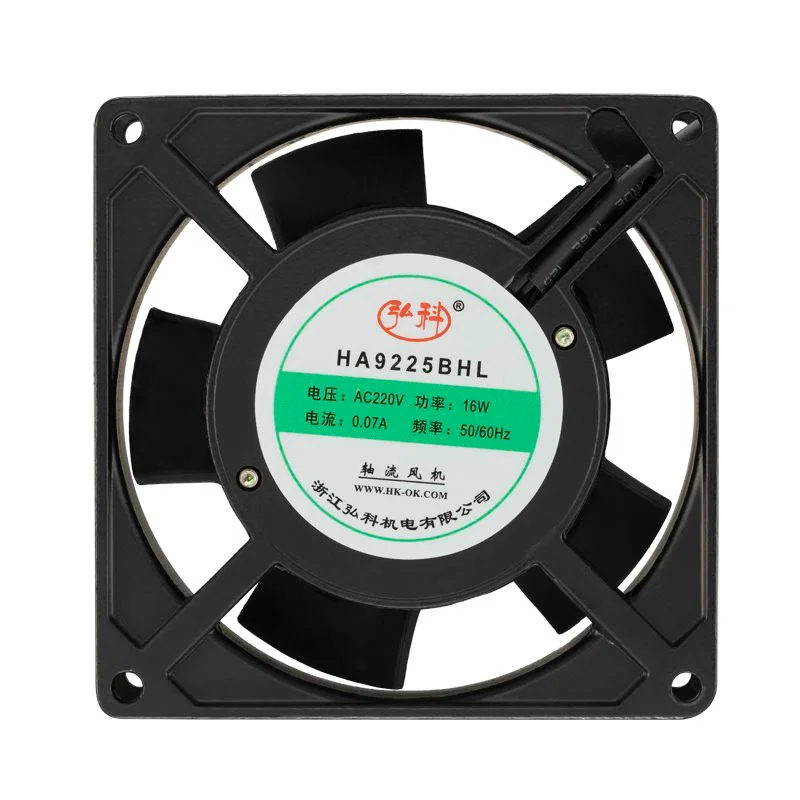
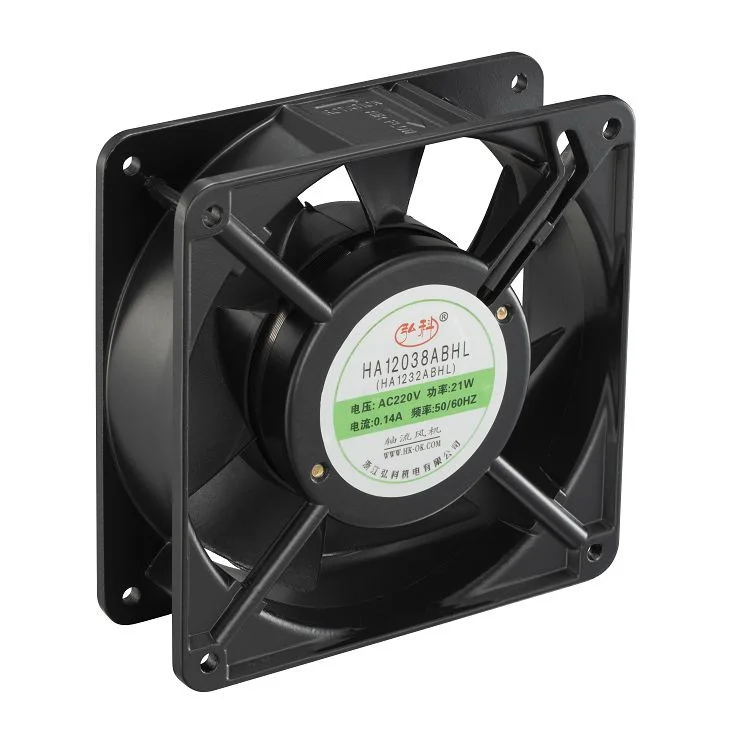
Small AC axial fans run directly from mains voltage: two wires in, no driver, no separate power supply. That simplicity is why they are still the default choice for control cabinets, power supplies, chargers and small machine enclosures.
The trade-off is control. An AC fan runs at the speed the supply gives it, and speed reduction usually means a voltage controller rather than a signal wire. If the installation needs variable speed, PWM control or a wide voltage range, the DC or EC versions in the same frame size are usually the better fit.
This range covers compact frame sizes for enclosure cooling, with matching finger guards, filter guards and dust shutters so the fan and the opening are specified together.
Products in This Range
-
AC Dual Ball Bearing Fan for Cabinet Cooling
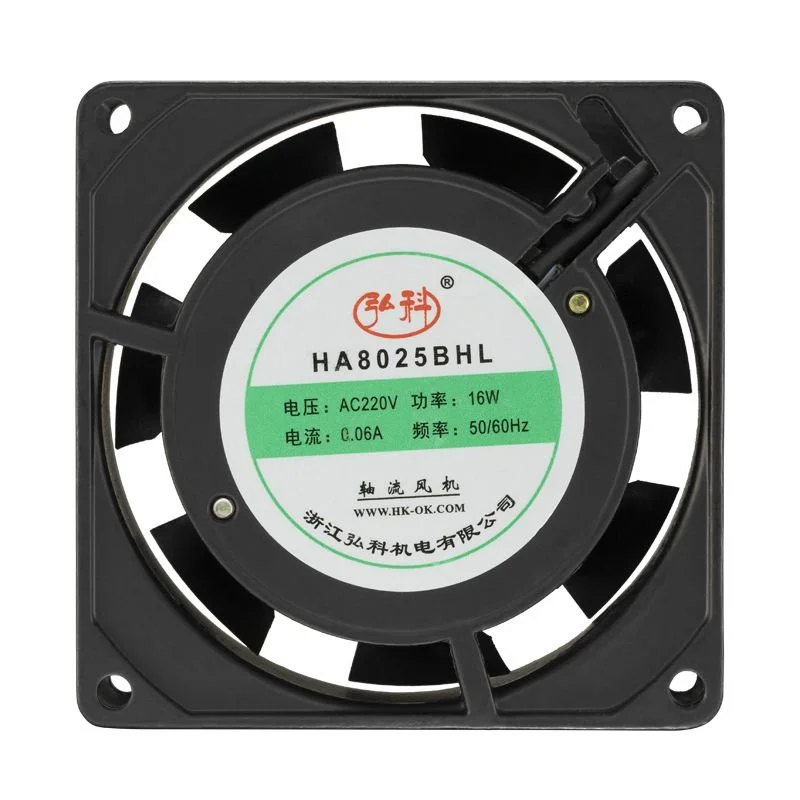
HA802501HB- Voltage: 115 / 230 V AC
- Frequency: 50 / 60 Hz
-
AC Small Axial Flow Fan for Cabinet Cooling
HA922501HS(B)- Voltage: 115 / 230 V AC
- Frequency: 50 / 60 Hz
-
AC Axial Fan 110 × 110 × 25 mm for Cabinet Cooling
HA1102501HS(B)- Frame Size: 110 × 110 × 25 mm
- Voltage: 115 / 230 V AC
-
AC High-Speed Cooling Fan for Enclosures
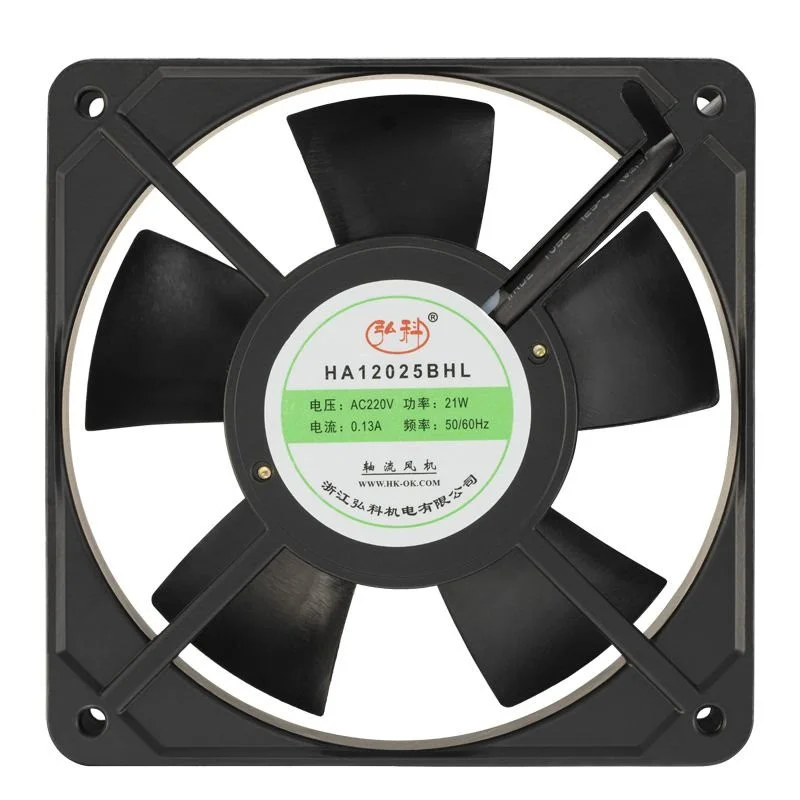
HA1202501HS(B)- Frame Size: 120 × 120 × 25 mm
- Voltage: 115 / 230 V AC
-
AC Axial Air Flow Fan for Panel and Equipment Cooling
HA1203801HS(B)- Voltage: 115 / 230 / 380 V AC
- Frequency: 50 / 60 Hz
-
AC Small Cooling Fan 150 × 150 × 50 mm
- Frame Size: 150 × 150 × 50 mm
- Housing: PBT thermoplastic, black, UL94V-0
-
AC Exhaust Fan for Wall and Cabinet Ventilation
HA1705001HS(B)- Voltage: 115 / 230 / 380 V AC
- Frequency: 50 / 60 Hz
-
AC Industrial Axial Fan for Plant and Machine Ventilation
HA1606001HB- Voltage: 115 / 230 / 380 V AC
- Frequency: 50 / 60 Hz
-
AC Axial Fan for Electric Drive Cabinet Cooling
HA1705501HB- Voltage: 115 / 230 V AC
- Frequency: 50 / 60 Hz
-
AC Brushless Axial Fan for Large Enclosures
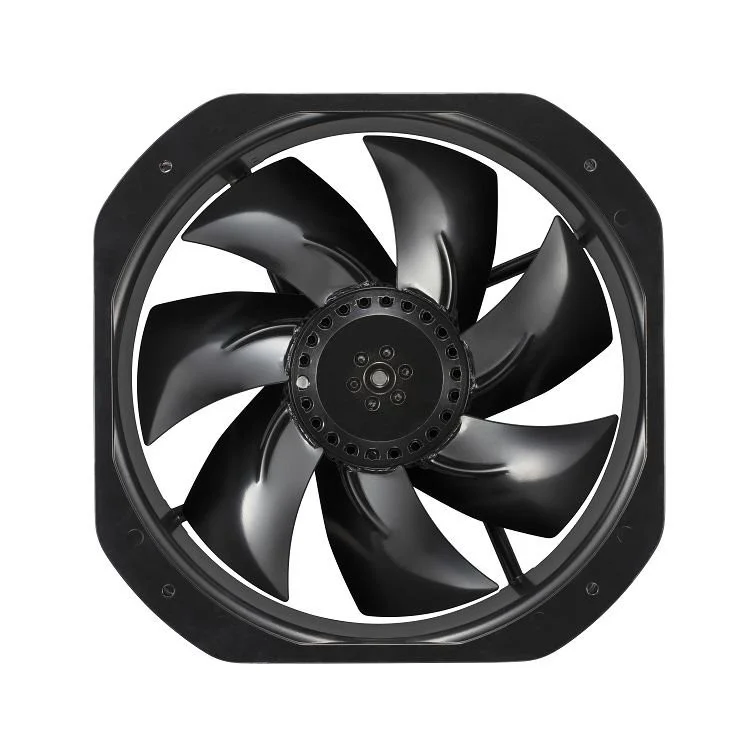
HA2258002HB- Voltage: 230 / 380 V AC
- Frequency: 50 / 60 Hz
-
AC Cabinet Cooling Fan, 2,280–2,570 m³/h
HA2808001HB- Voltage: 115 / 230 / 380 V AC
- Frequency: 50 / 60 Hz
Why Buy From WILMALL
Fan and opening specified together
Guards, filter guards and dust shutters are selected against the same frame and fixing centres, so the cut-out, the fan and the accessory arrive as one decision instead of three.
Voltage variants confirmed before quoting
Mains variants are confirmed per model rather than assumed from the catalogue. If the version you need does not exist in that frame, we say so before the order.
Sample before production
For a first order, a sample can be approved against the data sheet — airflow, noise, fixing pattern and label — before the production quantity is placed.
Where It Fits
Control and distribution cabinets
Exhaust fans paired with a filtered intake, often with a thermostat switching the fan with cabinet temperature.
Power supplies, chargers and inverters
Short, direct airflow paths through an enclosure wall, where a mains fan avoids adding a DC supply.
Equipment and machine OEM
Repeatable fan specifications for production equipment, with private label and fixed voltage.
How to Specify
Free-air figures are not installed figures
A catalogue airflow is measured with almost no resistance. Once the fan pulls through a filter and pushes through a louvre, delivered airflow drops — sometimes by a third. Size with the installed restriction in mind, not the free-air number.
Match the frame and the cut-out
Fixing-hole spacing and outside dimensions matter more than the nominal size. For a replacement, the old fan's label or a photo with a ruler is faster and more reliable than measuring by hand.
Bearing choice decides noise and life
Sleeve bearings are quiet at low speed but dislike heat and vertical mounting. Ball bearings cost more and tolerate higher temperatures, longer duty cycles and any mounting angle. In a hot cabinet, that difference is the whole service life.
Mains supply and speed control
Two-wire AC fans are not dimmable in the usual sense. If the installation needs speed control, confirm the controller type first: some voltage controllers cause motor noise or overheating at low settings. Where control matters, the DC or EC version in the same frame is the cleaner route.
Accessories are part of the specification
A guard changes the effective opening; a filter changes the pressure the fan works against. Specify fan and accessory together so the delivered airflow still meets the requirement.
Questions
Can these fans run from 110 V and 220 V?
Availability depends on the model and motor. Tell us the voltage, frequency and phase, and we will confirm which frame sizes are produced in that version.
Do I need a separate power supply?
No. These fans connect directly to mains voltage. If you need a DC input, a wide voltage range or PWM speed control, look at the DC or EC range instead.
How do I choose between ball and sleeve bearings?
Ball bearings for higher ambient temperature, vertical mounting or continuous duty. Sleeve bearings where low-speed noise is the priority and the fan sits horizontally in a clean enclosure.
Can the fan be speed-controlled?
With a suitable voltage controller, but not every motor tolerates it well. Tell us the controller you plan to use. If control is important, the EC or DC version is usually the better answer.
What accessories should be ordered with the fan?
At minimum a finger guard, plus a filter guard or dust shutter where the intake needs protection. For temperature-based switching, add a thermostat. We confirm the matching part numbers with the quotation.
Replacing a fan in an existing enclosure?
Send the label photo or the cut-out dimensions. We will confirm the closest frame, the voltage variant and the guard that fits the same fixing centres.