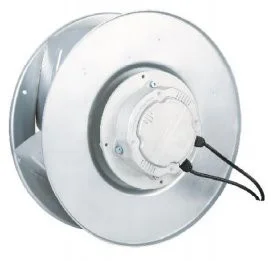
Overview
This is the combination for ducted systems that run for long hours: a backward-curved impeller for pressure, and an EC motor that keeps efficiency up when the speed comes down.
AC fans throttled by a voltage controller lose efficiency at reduced speed and can overheat the motor. An EC unit holds its efficiency across the range and accepts a control signal from a sensor, a timer or a BMS. In continuous ventilation — car parks, plant rooms, clean rooms — that is where the running cost is decided.
The limitations are the same as any EC product: a higher purchase price, electronics that dislike heat, and a control signal that has to be compatible. This range suits pressure duties with long running hours. If the fan switches on and off a few times a day, the AC version is the better buy.
Products in This Range
-
EC Backward Curved Centrifugal Cooling Fan
PMDWF74L25-190×62- Voltage: 123010 V
- Frequency: 50/60 Hz
-
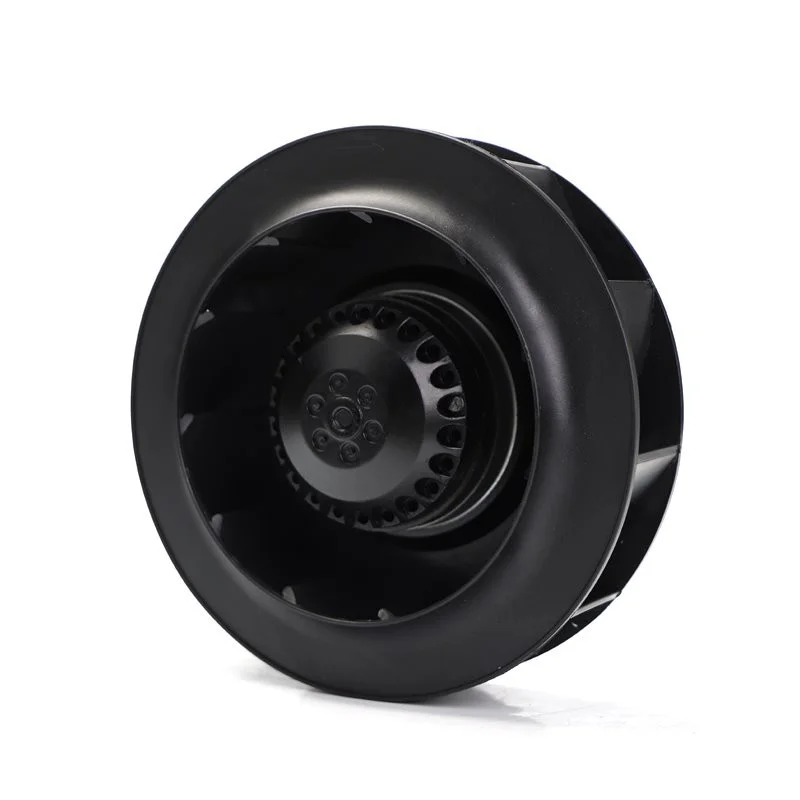
Outer Rotor Turbine Backward Curved Fan
Why Buy From WILMALL
Pressure and part-load efficiency together
The impeller gives the pressure; the EC motor keeps the efficiency when the system is turned down. Both figures are quoted at the duty point.
Control signal confirmed
0–10 V, PWM or a proprietary controller. We check what the BMS or sensor provides before matching the fan.
Honest economics
If the running hours are low, we will say the AC version pays back faster. EC is recommended where continuous operation justifies it.
Where It Fits
Continuous ducted ventilation
Car parks, plant rooms and corridors where the fan runs all day and speed follows demand.
Clean rooms and treatment units
Filtered air at a controlled pressure, with speed trimmed to the filter loading.
Retrofit of throttled AC systems
Replacing dampers and voltage controllers with signal-based speed control.
How to Specify
Start from running hours
The economics depend on hours at reduced speed. Estimate the annual running profile before comparing the EC premium with the AC alternative.
Control signal and integration
Confirm whether the site provides 0–10 V, PWM, or a bus interface. Some EC fans offer Modbus or proprietary options; most do not. Match the fan to the control you have, not the other way round.
Heat around the electronics
The controller sits in or near the motor. In a hot plant room or above a hot duct, the electronics see more than ambient. State the air temperature at the fan and keep the unit out of direct heat radiation.
Pressure at the duty point
Backward-curved impellers are chosen for pressure. Ask for the volume at the working pressure, and check that the EC motor can deliver it at the intended speed.
Service and replacement
EC fans are replaced as a unit, not repaired on site. Keep the model and control configuration on file; a substitute with a different signal will not drop in.
Questions
Is EC worth it for a ducted fan?
Where the fan runs long hours and speed can be reduced. The saving comes from part-load efficiency, not from the purchase price.
How is speed controlled?
Normally 0–10 V or PWM, sometimes through a bus module if the range offers one. Confirm the signal available at the site.
Can I keep my existing controller?
Only if it provides the right signal type and range. A voltage controller for an AC motor is not suitable for an EC fan.
What happens if the electronics fail?
The fan stops and is replaced as a unit. Keep a spare or a documented alternative for critical systems.
Can it be installed outdoors?
Depends on the IP rating and the enclosure around the electronics. State the location and we will confirm the rating needed.
Related Ranges
Tell us the running hours and the control signal.
Those two answers decide whether EC earns its premium — and which unit will integrate with the control system you already have.