Overview
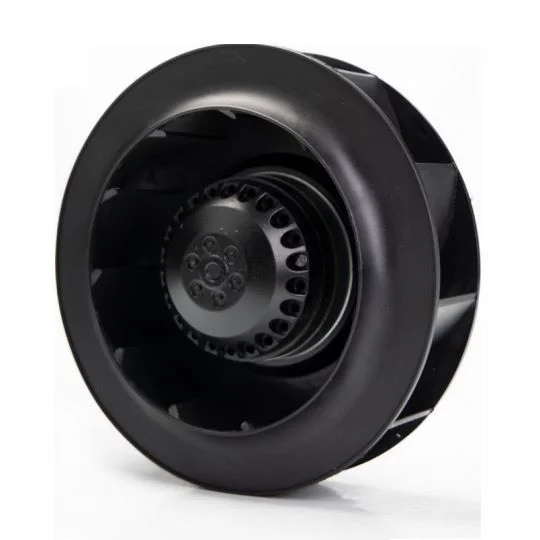
A backward-curved impeller has blades that lean away from the direction of rotation. Air leaves the wheel with less swirl, the fan runs faster for the same diameter, and efficiency stays higher as pressure rises — which is why this shape is used wherever the system resists.
It also tolerates dirt better. Dust does not pack into the blade roots the way it does on a forward-curved wheel, so the fan keeps its balance and its duty point for longer. That makes it the usual choice for dust extraction, ducted supply and industrial exhaust.
The cost is noise and price: backward-curved fans are louder at the same airflow and more expensive to build. This range covers AC-driven units for extraction and pressure duties. Tell us the working pressure and what the air carries before choosing between the two impeller types.
Products in This Range
-
AC Backward Curved Turbo Centrifugal Fan
190FLW2-2W- Voltage: 220 / 380 V
- Frequency: 50 Hz
-
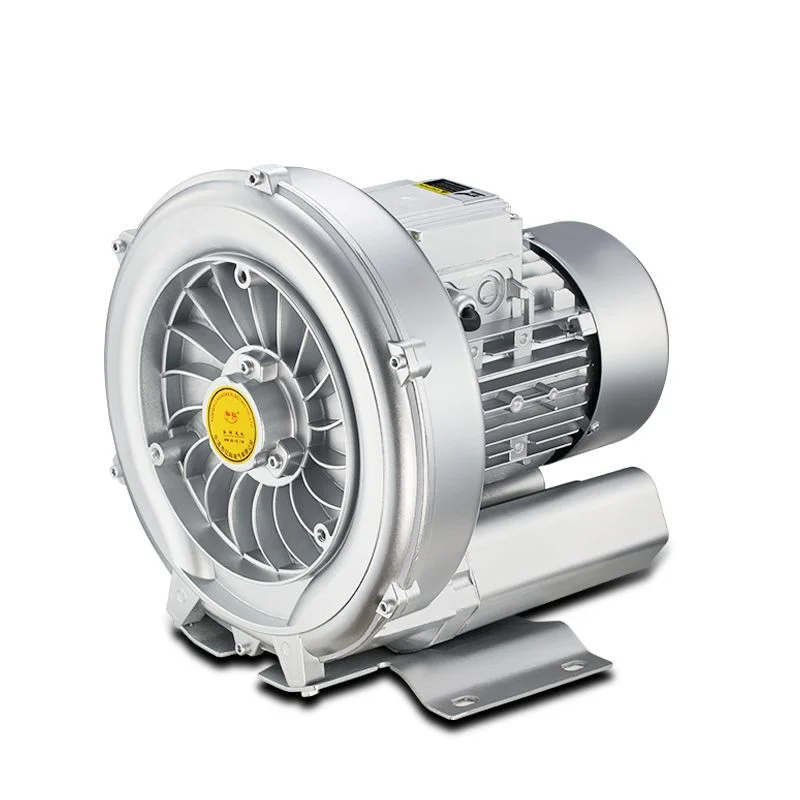
High Pressure Vortex Air Pump
XBG- Voltage: 220 / 380 V
- Power: 120–11000 W
Why Buy From WILMALL
Impeller type justified
If the duty is low pressure and clean, a forward-curved fan is cheaper and quieter. We recommend the type the duty needs, not the one with the higher margin.
Pressure stated at the duty point
Backward-curved fans are chosen for pressure. We quote the volume at the working pressure, not the free-air maximum.
Wear and balance considered
For abrasive dust, impeller material and clearance matter as much as airflow. We flag where a standard wheel will wear out early.
Where It Fits
Dust and fume extraction
Local extraction from machines through ductwork and a collector, where pressure and dirt tolerance both matter.
Ducted supply and exhaust
Longer runs with filters and dampers, where a forward-curved fan would lose too much volume.
Industrial process air
Moving air through constricted equipment paths at a steady pressure.
How to Specify
Read the curve at the working point
The advantage of this impeller appears at pressure. Compare fans at your duty point — volume at working pressure — rather than at free air, where most models look similar.
Dirt tolerance has limits
Backward-curved wheels resist dust better than forward-curved ones, but abrasive dust still erodes blades and hubs. For heavy loading, ask about wear protection or a different impeller material.
Speed, motor and drive
These fans run faster than forward-curved units of the same size, which raises motor speed and bearing duty. Confirm the motor's speed rating and whether a V-belt or direct coupling is used.
Noise is the trade-off
Expect more noise at the same airflow. If the site has a limit, plan attenuation at the source — a larger, slower fan, a flexible connector, a silencer on the discharge.
Balance and vibration after cleaning
Cleaning a dirty impeller restores balance only if material is removed evenly. Uneven cleaning is a common cause of vibration after maintenance.
Questions
When should I choose backward curved over forward curved?
When the system resists: filters, long ducts, collectors. Also when the air carries dust. Forward-curved is better for high volume at low pressure and lower noise.
Can it handle dusty air?
Better than a forward-curved wheel, but not unlimited. Abrasive dust wears the blades. Tell us the dust load and we will flag whether wear protection is needed.
Why is it louder?
Higher speed and a different blade exit angle. The noise is the price of pressure. A larger unit running slower reduces it.
Can it be speed-controlled?
Three-phase motors usually can, within insulation and bearing limits. Single-phase motors often cannot. Confirm the control method before the motor is chosen.
How often should the impeller be cleaned?
It depends on the dust load. Check balance and vibration after every cleaning; uneven removal is worse than leaving a light, even coating.
Send the duty point at working pressure.
Volume at the system pressure, the dust load and the noise limit decide the impeller and the speed. Free-air figures will not get you there.