

Overview
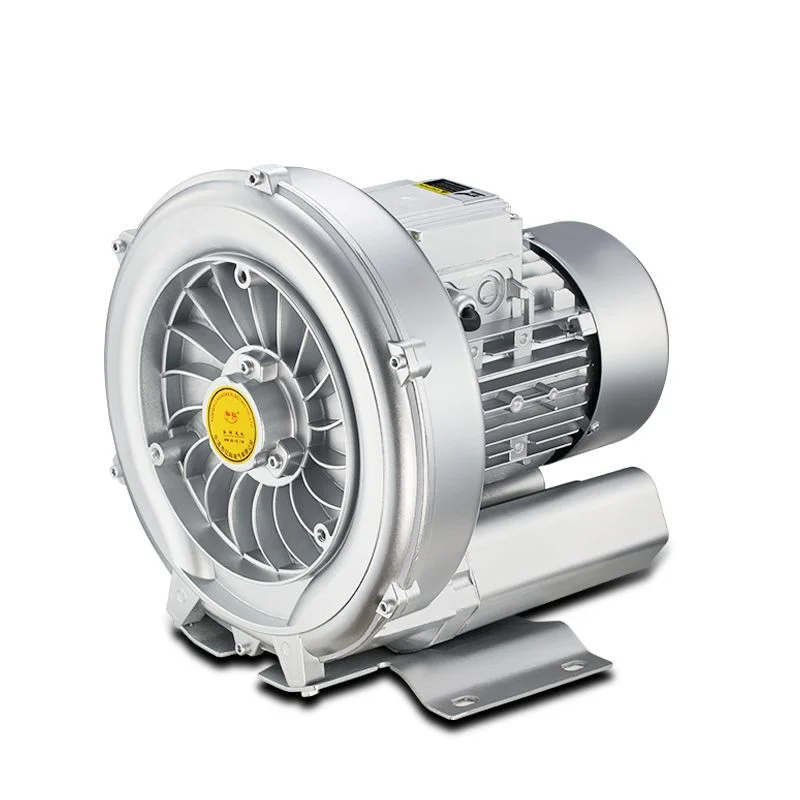
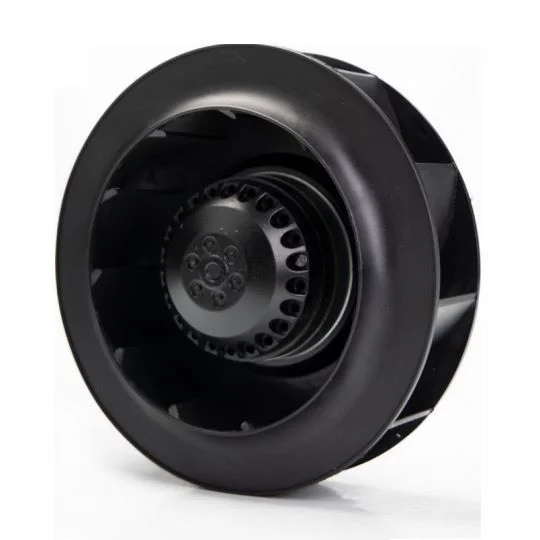
A backward-curved impeller in a compact turbo housing. The blade angle lets the fan hold pressure where a forward-curved wheel would lose volume, and it tolerates dust better because material does not pack into the blade roots.
The range covers several sizes and motor options. It suits ducted supply, extraction and equipment where the system resists more than a simple opening.
Where it fits
- Ducted supply and extraction
- Dust and fume extraction
- Equipment with a constricted path
- Retrofit where a forward-curved fan stalls
Specifications
| Model | Rated Voltage (V) | Frequency (Hz) | Power (w) | Current (AMP) | Rotating speed (r/min) | Electric capacity (UF) | Air Volume (m3/h) | Pressure (Pa) | Weight (kg) |
|---|---|---|---|---|---|---|---|---|---|
| 190FLW2-2W | 220V | 50 | 85 | 0.38 | 2700 | 2.2 | 552 | 300 | 1.8 |
| 190FLW3-2W | 380V | 50 | 85 | 0.22 | 2700 | – | 552 | 300 | 1.8 |
| 220FLW2-2W | 220V | 50 | 90 | 0.4 | 2500 | 2.2 | 720 | 380 | 2.1 |
| 220FLW3-2W | 380V | 50 | 90 | 0.2 | 2500 | – | 720 | 380 | 2.1 |
| 225FLW2-2W | 220V | 50 | 130 | 0.6 | 2500 | 2.7 | 960 | 400 | 2.5 |
| 225FLW3-2W | 380V | 50 | 130 | 0.35 | 2S00 | – | 960 | 400 | 2.5 |
| 250FLW2-2W | 220V | 50 | 130 | 0.6 | 2500 | 27 | 1200 | 500 | 2.5 |
| 250FLW3-2W | 380V | 50 | 130 | 0.35 | 2500 | – | 1200 | 500 | 2.5 |
| 250FLW2-4W | 220V | 50 | 48 | 0.25 | 1400 | 1.4 | 720 | 130 | 3.0 |
| 250FLW3-4W | 380V | 50 | 48 | 0.12 | 1400 | – | 720 | 130 | 3.0 |
| 280FLW2-2W | 220V | 50 | 250 | 1.4 | 2500 | 7 | 1920 | 700 | 4.0 |
| 280FLW3-2W | 380V | 50 | 230 | 0.65 | 2500 | – | 1920 | 700 | 4.0 |
| 280FLW2-4W | 220V | 50 | 80 | 0.4 | 1400 | 4 | 960 | 200 | 3.0 |
| 280FLW3-4W | 380V | 50 | 70 | 0,20 | 1400 | – | 960 | 200 | 3.0 |
| 310FLW2-4W | 220V | 50 | 130 | 0.6 | 1400 | 4 | 1800 | 250 | 3.8 |
| 310FLW3-4W | 380V | 50 | 130 | 0.3 | 1400 | – | 1800 | 250 | 3.8 |
| 355FLW2-4W | 220V | 50 | 200 | 1 | 1400 | 5 | 2100 | 390 | 4.7 |
| 355FLW3-4W | 380V | 50 | 200 | 0.55 | 1400 | – | 2100 | 390 | 4.7 |
| 400FLW2-4W | 220V | 50 | 300 | 1.6 | 1360 | 6 | 2520 | 490 | 6.5 |
| 400FLW3-4W | 380V | 50 | 260 | 0.8 | 1360 | – | 2520 | 490 | 6.5 |
| 450FLW2-4W | 220V | 50 | 550 | 2.6 | 1300 | 12 | 4200 | 490 | 10 |
| 450FLW3-4W | 380V | 50 | 550 | 1.3 | 1300 | – | 4200 | 490 | 10 |
Selection and installation notes
Backward-curved fans run faster and are louder at the same airflow. Plan noise attenuation at the source rather than relying on the duct.
For abrasive dust, ask about impeller material and clearance. Standard wheels wear at the blade tips.
FAQ
When is a turbo fan the right choice?
When pressure is the constraint and the space is limited. It packs a backward-curved wheel into a smaller housing.
Can it handle dust?
Better than a forward-curved wheel, but abrasive dust still wears the blades. Tell us the dust load.
Can it be speed-controlled?
Three-phase motors usually can, within their limits. Single-phase motors often cannot.
How do I reduce noise?
A larger, slower unit and a flexible connection. Silencers help on the duct but add resistance.
Request Quote
Interested in this product? Share your requirements or questions using the form.
-
Your requirements
Include the specifications, options, or quantity you need, if known.
-
Your questions
Ask about product details, availability, or order information.
-
Your contact details
Leave an email address where you can receive a reply.