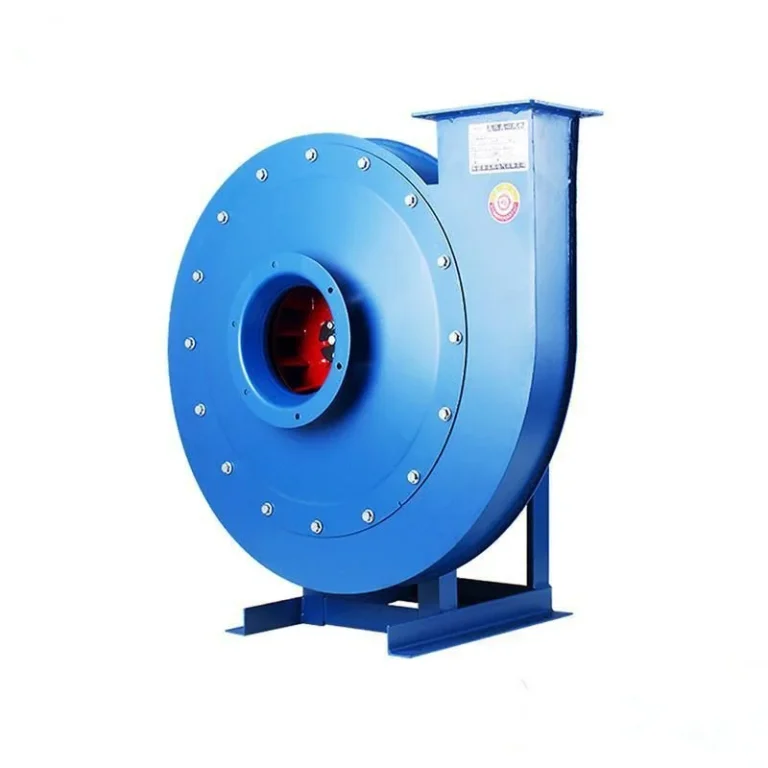
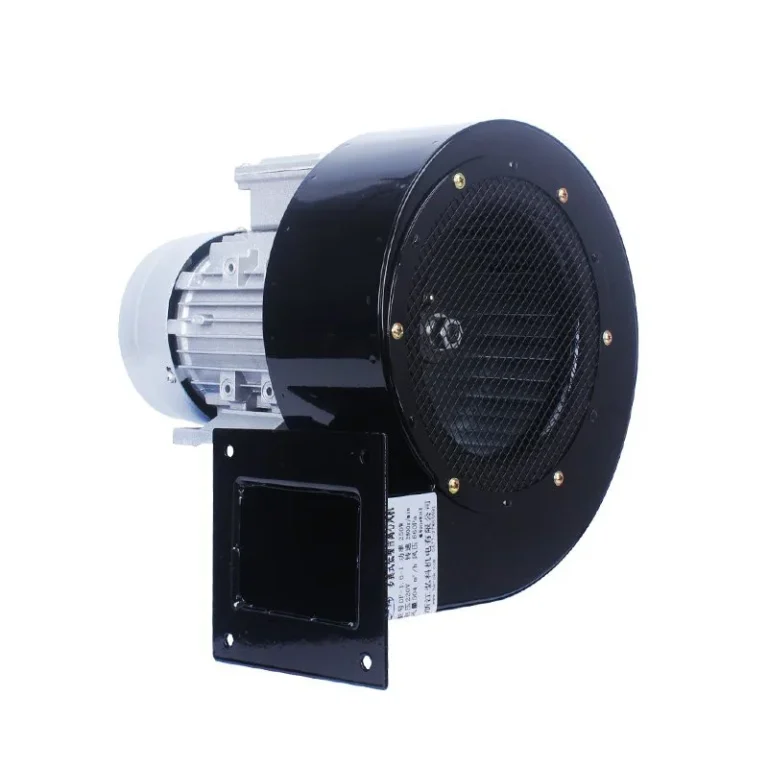
High Pressure and Low Pressure Centrifugal Fans
Pressure class decides impeller width, blade angle, casing thickness and price. How to tell which class a duty needs before a supplier picks for you.
Read More
Choosing a centrifugal fan manufacturer is mostly an exercise in telling a factory from a trading desk. Both will send you a catalogue, both will quote, and both will promise the same delivery date. The difference appears in year two, when a bearing fails and one of them can tell you the part number without asking.
This is the checklist we would use if we were buying rather than selling, written with the twelve points that actually predict what will arrive.
Almost no centrifugal fan manufacturer makes everything, and every centrifugal fan manufacturer buys in more than buyers expect. Motors are bought. Bearings are bought. Laser cut plate may be subcontracted. What matters is knowing which parts are made in house, because those are the parts where the supplier controls quality and can respond to a problem.
A useful question: where is the impeller made? If the answer is a named workshop with a balancing machine, that is a manufacturer. If the answer is vague, everything downstream is a guess.
Impeller balancing is the single most predictive piece of equipment in a fan factory. A dynamic balancing machine is not expensive relative to a production line, but it requires an operator who knows how to use it and a process that records the result. Ask for a balancing report with a serial number on it. A factory that balances properly will have one to hand.
Balance grade matters more as speed rises. G6.3 is the usual commercial standard, adequate up to about 3,000 r/min. Above that, G2.5 is common for better units. Our own units are balanced to G6.3 as standard, with tighter grades available on request for high speed applications.
A fan performance test bench is the difference between a catalogue and a claim. Ask whether the factory tests every unit, samples, or none. Ask what the test measures: airflow, static pressure, speed, power, noise. Ask whether a test record ships with the unit.
Our quality assurance process describes the routine tests each centrifugal fan goes through before packing, and every unit ships with a performance record. Buyers who ask for that in the RFQ get it; buyers who do not, often do not.
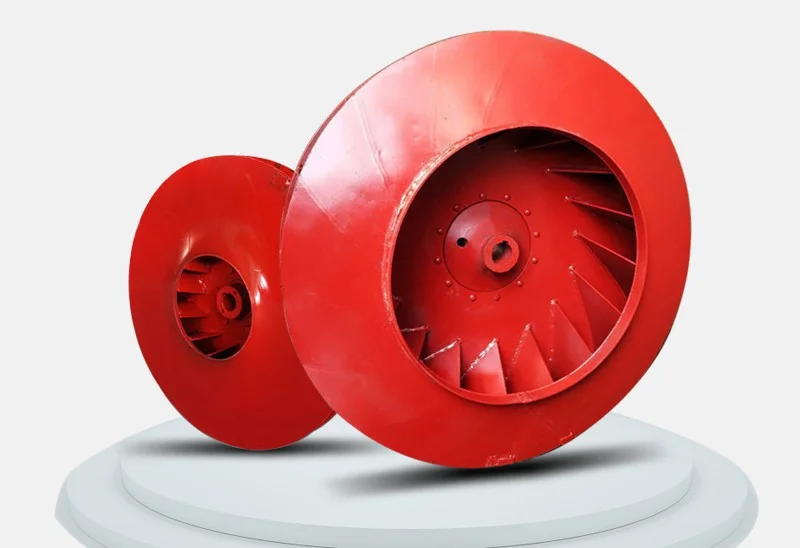
A serious centrifugal fan catalogue for any centrifugal fan contains curves, not just photographs. It gives model numbers that encode machine size and impeller diameter, and it lists airflow, pressure, speed, motor power and noise for each. A catalogue that only lists airflow is a catalogue compiled by someone who has never had to select a fan.
Ours publishes the full row: for the high pressure range, machine number, motor, speed, flow and full pressure appear together, which is what lets a buyer check a selection without asking us. That transparency costs us the ability to oversell, which is the point.
CE, UKCA, SASO, SNI, SONCAP, EAC, ATEX, IECEx. The list matters less than the scope. A CE declaration that covers the fan but not the motor, or an ATEX certificate that names a family rather than the exact model, will not survive an inspection. Ask for the certificate and read the model list.
Our certification page lists what we hold and for which models. If a destination requires something we do not hold, we say so before the order rather than after.
If you need your own branding, ask early and ask specifically: nameplate, packaging, manual, and whether the drawings can carry your part numbers. A factory that does OEM regularly will answer in one email. One that does not will offer to print a sticker.
Our OEM and ODM service page sets out what changes and what does not, including the point at which a modified impeller becomes a new tooling project.
Three steps, in increasing cost and decreasing risk.
Ask for a pre-production sample of the standard model closest to your duty, and test it yourself against the curve. This is cheap and catches most problems, because a factory that cannot deliver a sample on curve will not deliver a container on curve.
For a first container, book a third party inspection before shipment. The inspector checks quantity, nameplate data, dimensions, paint and packing against the drawings. It costs a few hundred dollars and settles arguments before they become freight disputes.
For a custom impeller or a large unit, ask for a witness test at the factory bench. If the supplier has a bench, they will agree. If they do not, you have learned something important before the money moved.

Two references are worth more than twenty. Ask for a customer who bought the same model family, in the same industry, at least a year ago. Then call and ask four questions: did the unit meet its duty when it was commissioned, has anything failed, how did the supplier respond when something did, and would they order again.
The third question is the one that predicts everything. Every supplier ships a good unit; the difference between manufacturers appears in the fourth month, when a bearing starts to rumble and somebody has to decide who pays. A reference who says the problem was solved in a week is worth more than three who say nothing ever went wrong.
A price 40 percent below every other offer, with no explanation of what was removed. A catalogue where every model has the same photograph. A refusal to provide a drawing before payment. A warranty that excludes bearings and motors, which are the two parts that fail. And an answer to every technical question that begins with “no problem” and ends with no number.
None of these is proof of a bad supplier. All of them together predict one.
Small, standard, and documented. One model from the centrifugal fan range, shipped with drawings, test record and certificate, inspected before dispatch. If that goes well, the second order can be larger and more interesting. If it does not, the loss is limited and the lesson is cheap.
That is also why we prefer a first order to be a standard unit rather than a special. A special impeller is an act of trust, and trust is better earned on a standard duct unit than on a bespoke casing.
Ask for the general arrangement drawing, the bearing designation for a specific model, and a balancing report. A factory answers all three quickly. A trading company has to go and ask, and the answers arrive incomplete.
Model numbers that encode size, and for each model the airflow, pressure, speed, motor power and noise. A catalogue with airflow alone cannot be used for selection and usually indicates the supplier does not do selection work.
Only with a small standard order and a pre-shipment inspection. The savings on a first container rarely cover the cost of a failed one, so the trial should be sized to the risk rather than to the discount.
At minimum CE with an EU declaration of conformity, plus whatever the destination requires: SASO and SABER for Saudi Arabia, SNI for Indonesia, SONCAP for Nigeria. Explosion-proof models need ATEX or IECEx naming the exact model.
For a standard model, one working day. For a selection against a described duty, two or three days if a curve has to be checked. Anything that takes a week for a standard unit is being priced by someone who has to ask the factory.