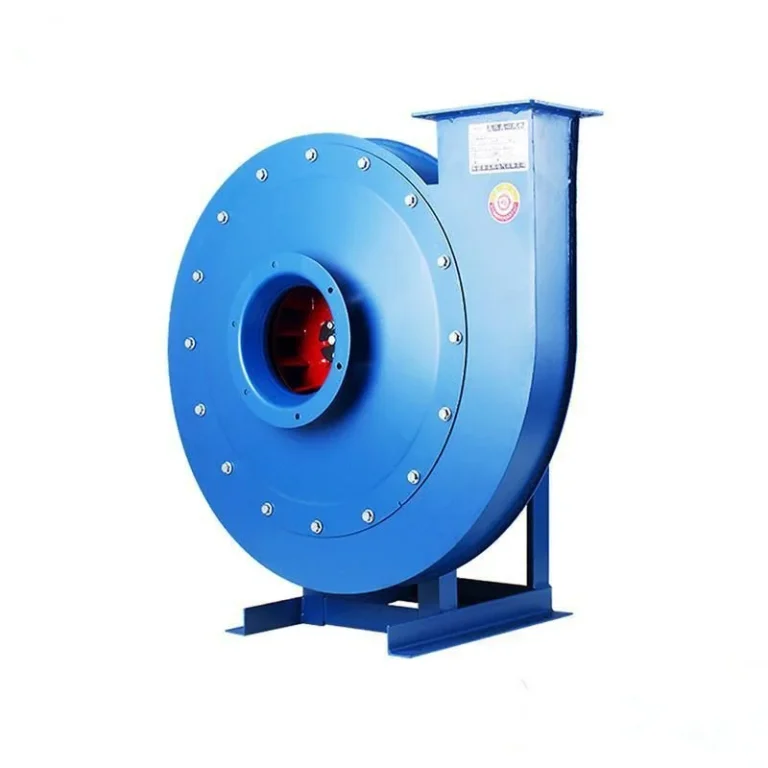
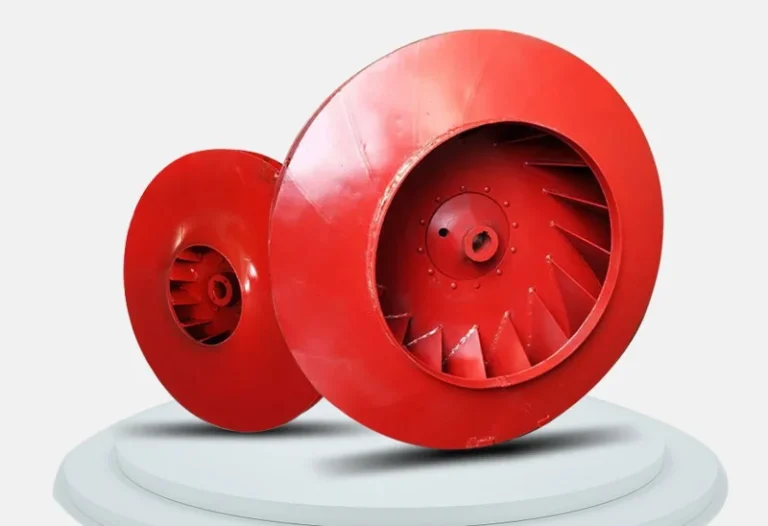
High Pressure and Low Pressure Centrifugal Fans
Pressure class decides impeller width, blade angle, casing thickness and price. How to tell which class a duty needs before a supplier picks for you.
Read More
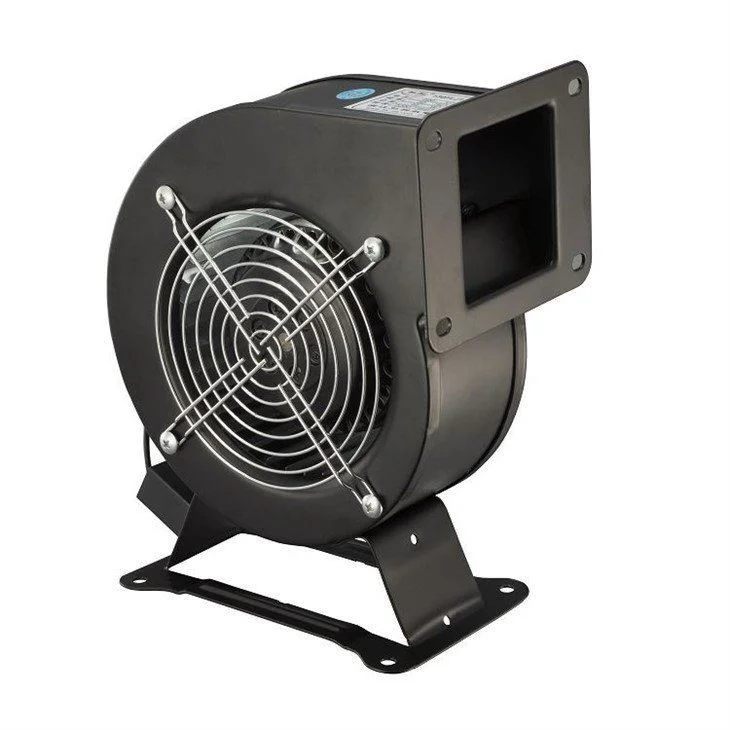
Searches for a 5 hp centrifugal fan, a 10 hp centrifugal fan, or a 4, 6 or 12 hp unit all come from the same place: a buyer with a motor size in mind and no airflow figure. Horsepower is the easiest thing to specify and the least informative, because the same 5 hp motor can drive fans that deliver wildly different airflow depending on the impeller it turns and the pressure it works against.
This page explains what those horsepower figures actually buy, with real numbers from our own range so the relationship is visible rather than theoretical.
Power is the product of airflow and pressure, divided by efficiency. That single relationship explains everything. A 5 hp motor driving a large slow impeller at 300 Pa moves far more air than the same motor driving a small fast impeller at 5,000 Pa. Both are 5 hp centrifugal fans. One moves 8,000 m3/h, the other moves 900 m3/h.
So the honest answer to “how much CFM does a 5 hp centrifugal fan move” is a range, and the range is wide: roughly 700 to 9,000 m3/h, or 400 to 5,300 CFM. What narrows it is pressure. Give a supplier the pressure and the answer becomes specific.
Shaft power in kW equals airflow in m3/s multiplied by total pressure in Pa, divided by fan efficiency, divided by 1,000. For a quick estimate at 65 percent efficiency, a fan moving 1 m3/s at 1,000 Pa absorbs about 1.54 kW.
Three consequences follow, and they are worth memorising because they prevent most sizing mistakes.
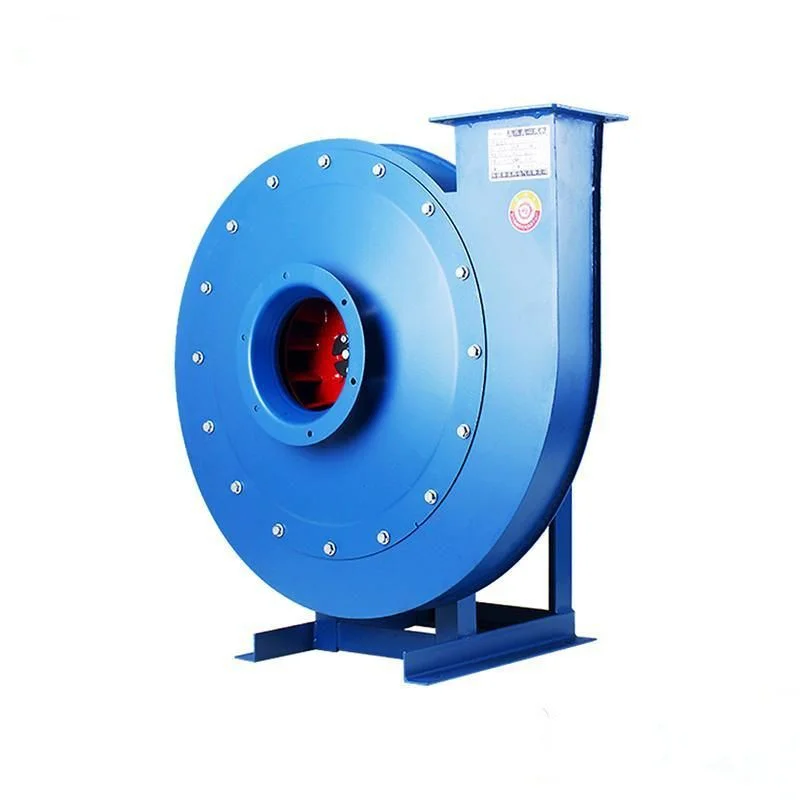
The table below converts those common horsepower figures into kilowatts and shows what each buys across two very different impeller designs from our range. The left-hand group is a high pressure process fan at 2,900 r/min; the right-hand group is a boiler fan at lower speed. Same power, different product.
| Motor | High pressure fan, 2,900 r/min | Boiler fan, 1,650 to 2,950 r/min |
|---|---|---|
| 4 hp (3 kW) | 3.15A machine: 390 to 810 m3/h at 1,919 to 1,953 Pa | 4C at 3,450 r/min: 3,996 to 1,355 m3/h at 1,893 to 2,676 Pa |
| 5 hp (3.7 kW) | 3.55A to 4A machine: 560 to 1,264 m3/h at 2,545 to 3,597 Pa | 4.5C at 2,925 r/min: 4,970 to 2,317 m3/h at 1,667 to 2,327 Pa |
| 6 hp (4.5 kW) | 4.5A machine: 1,174 to 2,062 m3/h at 4,603 to 4,447 Pa | 5.4C at 2,600 r/min: 7,980 to 3,900 m3/h at 2,002 to 2,604 Pa |
| 10 hp (7.5 kW) | 5A machine: 3,166 to 3,488 m3/h at 5,697 to 5,323 Pa | 7.1C at 1,915 r/min: 13,770 to 7,113 m3/h at 1,859 to 2,487 Pa |
| 12 hp (9 kW) | 5.6A machine: 2,262 to 3,619 m3/h at 7,182 to 7,109 Pa | 7.1C at 2,100 r/min: 15,100 to 8,170 m3/h at 2,230 to 2,990 Pa |
Read the rows across and the point becomes obvious. At 10 hp, the high pressure fan moves around 3,300 m3/h against 5,500 Pa. The boiler fan on the same horsepower moves around 10,000 m3/h against 2,200 Pa. Neither is better; they are answering different questions.
One horsepower is 0.7457 kW. The quick mental versions: 4 hp is 3 kW, 5 hp is 3.7 kW, 6 hp is 4.5 kW, 10 hp is 7.5 kW, and 12 hp is 9 kW. Motor frames are built in standard sizes, so a 3.7 kW enquiry will usually be answered with a 4 kW motor, and a 9 kW enquiry with an 11 kW motor in some markets.
The trap is the difference between motor rating and absorbed power. A fan that absorbs 3.2 kW is normally fitted with a 4 kW motor, so a buyer asking for a 5 hp centrifugal fan may receive a unit with a 3 kW motor doing the same job. Always confirm absorbed power at duty, then check the motor margin is between 10 and 15 percent.
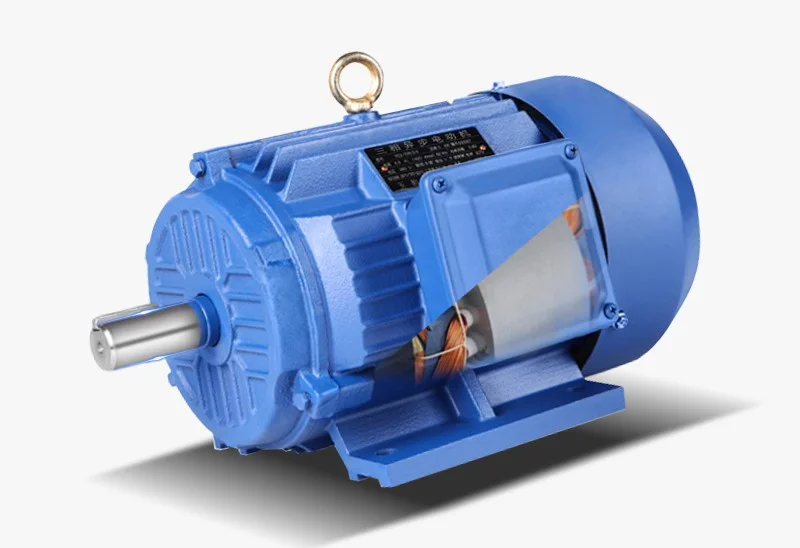
Suppose a plant needs 4,000 m3/h at 2,500 Pa. Using the formula at 70 percent efficiency, the shaft power is about 3.97 kW, so a 4.5 kW motor is the sensible choice and that is a 6 hp centrifugal fan. Looking at the boiler fan table on this page, the 4.5C machine number at 2,925 r/min delivers 4,970 to 2,317 m3/h at 1,667 to 2,327 Pa with a 4 kW motor, which brackets the duty neatly.
Now suppose the same buyer instead asks for a 12 hp centrifugal fan. The larger motor would buy a bigger impeller and more airflow, but at 2,500 Pa the unit would be running well to the right of its best efficiency point, with noise and power consumption to match. The extra money would buy nothing the system can use.
Five variables, in order of impact.
If a listing claims a 5 hp centrifugal fan moves 20,000 m3/h, work backwards. At 20,000 m3/h and 5 hp, or 3.7 kW, the fan can only be developing about 400 Pa at 65 percent efficiency. If the application needs 1,500 Pa, that claim is false by a factor of nearly four. This arithmetic takes thirty seconds and kills most inflated listings immediately.
Our own figures are published per model for exactly this reason. The high pressure process fan table shows motor, speed, flow and full pressure in one row, and the boiler fan table does the same at lower speeds and larger volumes. If a competing quote cannot produce the equivalent, the airflow number it gives you is a free-air figure.
Start with airflow and pressure from the system, not with a motor size. Select the impeller that meets the duty at a sensible speed. Read off the absorbed power. Add 10 to 15 percent margin. That gives the motor rating. Buyers who work in that order get the right centrifugal fan on the first order; buyers who start from “I need a 10 hp unit” usually end up with a machine that either cannot reach the duty or wastes power for years.
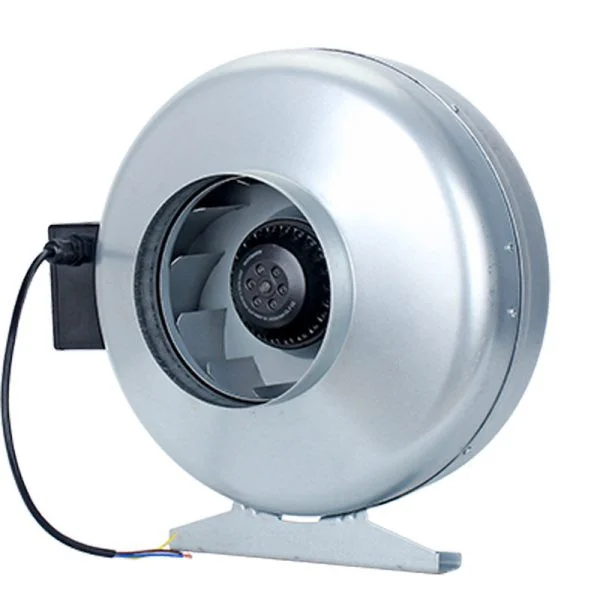
For small equipment the same logic applies at a much smaller scale. A DC centrifugal blower delivering 300 Pa from 30 W is doing the same job in miniature, and the power-to-duty relationship is identical.
Between roughly 400 and 5,300 CFM depending on pressure. At 300 Pa it can move several thousand CFM; at 5,000 Pa it moves a few hundred. The horsepower does not determine the airflow, the impeller and the pressure do.
It can be, if the system is small and the filter resistance is known. A 10 hp unit at 7.5 kW can deliver around 3,300 m3/h at 5,500 Pa or 10,000 m3/h at 2,200 Pa depending on design, so the answer depends entirely on the duct and filter pressure drop.
It usually refers to a 12 inch impeller or a 12 hp motor, and the two are not the same thing. A 12 inch impeller is a small fan; a 12 hp motor is a substantial one. Ask which dimension is being quoted before comparing prices.
Only if the impeller and shaft can take the extra power and the duty point actually needs it. Fitting a larger motor does not increase airflow on its own, because the fan still runs at the same speed. Airflow rises only if the speed rises or the resistance falls.
Because motors are selected with margin. A fan absorbing 2.4 kW is normally supplied with a 3 kW motor so it can tolerate a slightly open system, voltage variation and a bit of overspeed without tripping. Matching the motor exactly to the absorbed power is a false economy.