High Pressure and Low Pressure Centrifugal Fans
Pressure class decides impeller width, blade angle, casing thickness and price. How to tell which class a duty needs before a supplier picks for you.
Read More
Ask ten suppliers for a centrifugal fan and three will send you a blower. Ask for a centrifugal blower and you may receive a fan. The two words are used interchangeably in sales correspondence and mean different things in engineering documents, and the gap between them is where specification disputes live.
This page sets out where the line actually sits, why the distinction changes what you should order, and how to write a specification that removes the ambiguity entirely.
A centrifugal fan and a centrifugal blower are the same machine. Both use a rotating impeller to throw air outward into a casing. If a supplier calls their product a centrifugal blower, they are describing the same hardware with a different word, usually because the duty is pressure-biased rather than volume-biased.
The confusion starts because “blower” is also used for a genuinely different machine: the positive displacement blower, including the rotary lobe type, which traps a fixed volume of air and pushes it through rather than accelerating it. That machine behaves nothing like a fan.
| Property | Centrifugal fan | Centrifugal blower | Rotary lobe blower |
|---|---|---|---|
| Working principle | Accelerates air, converts velocity to pressure | Same as centrifugal fan | Traps a fixed volume per revolution |
| Flow versus pressure | Flow falls as pressure rises | Same | Flow nearly constant as pressure rises |
| Typical pressure | 100 to 15,000 Pa | 800 to 15,000 Pa | 5,000 to 100,000 Pa |
| Typical airflow | 100 to 200,000 m3/h | 100 to 20,000 m3/h | 50 to 10,000 m3/h |
| Controllability | Good with a damper or drive | Good | Poor, usually fixed speed |
| Noise | Broadband | Broadband, higher tone | Pulsating, tonal |
| Typical use | Ventilation, HVAC, process air | Pressure duties, small high pressure units | Aeration, pneumatic conveying, vacuum |
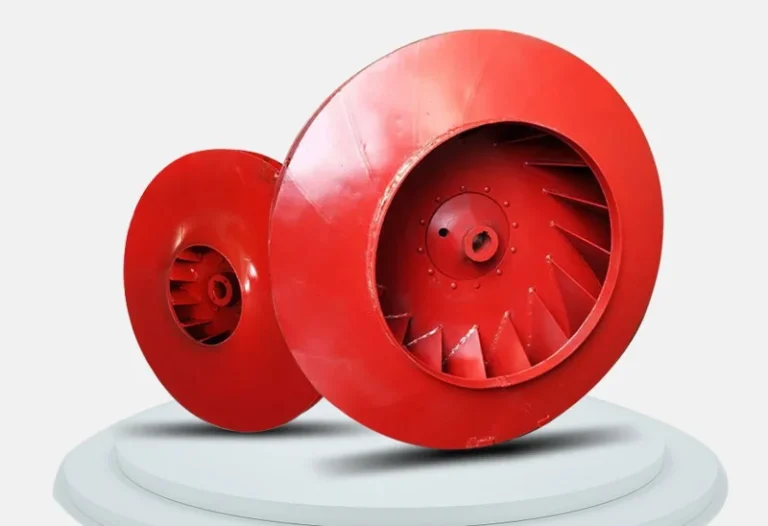
The middle column is the one that causes arguments. A centrifugal blower is a fan with the volume-to-pressure balance pushed towards pressure: a narrower impeller, more blades, higher speed, heavier construction. It is the same family, tuned differently.
Three situations where the choice of word has real consequences.
Tender documents and specifications. A consultant writes “centrifugal blower, 1,500 Pa” and a supplier quotes a centrifugal fan. Technically compliant, commercially contested. If the specification also names a flow, a speed and a motor rating, the argument disappears because the hardware is pinned down by numbers rather than by a noun.
Customs classification. Both fall under HS 8414.59 in nearly every case, so the word does not change the tariff line. What does change it is whether the unit is complete or a part, which is why the datasheet matters more than the label.
Spare parts and replacement. A buyer who replaces a “blower” with a “fan” of the same airflow but a different pressure characteristic will find the system does not perform, and the supplier will point out, correctly, that the duty point was never the same.
In practice the vocabulary settles into four terms, and knowing which one a supplier means removes most of the ambiguity.
Centrifugal fan. The general term, covering the whole family regardless of pressure bias. Used when the priority is volume at moderate pressure.
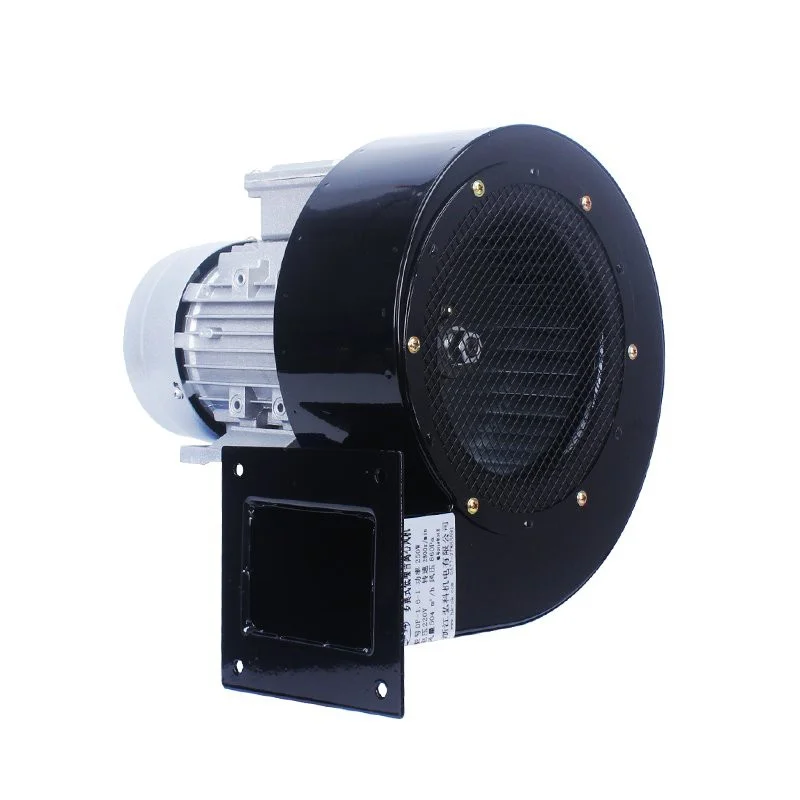
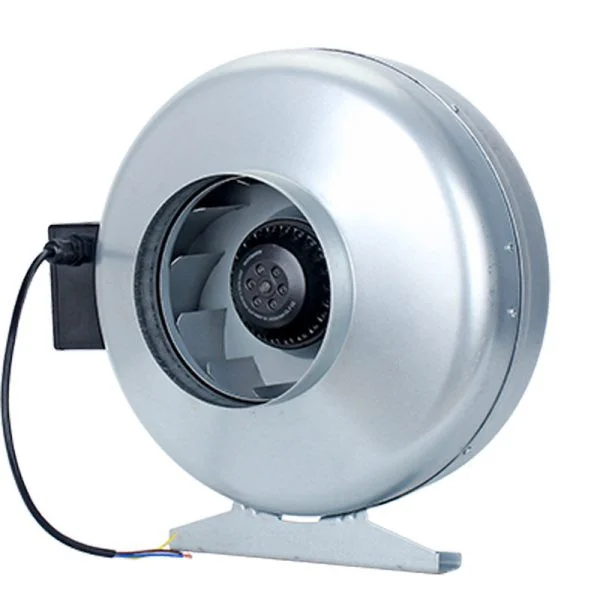
Centrifugal blower. The same machine, described when the priority is pressure. A blower in this sense usually has a narrower impeller, more blades and a higher speed than a fan of the same diameter. Our DC centrifugal blowers are named that way for exactly this reason: they exist to hold pressure inside a small enclosure, not to move large volumes.
Rotary blower or lobe blower. A positive displacement machine, unrelated to the centrifugal family. Constant flow against rising pressure.
Turbo blower. A high speed centrifugal machine, often with an integral gearbox and a permanent magnet motor, used for aeration and reaching pressures between a fan and a lobe blower. It is a centrifugal machine, but at a pressure level where the design has more in common with a compressor.
When a specification uses one of these words without a pressure figure, the word is doing no work. When it uses a pressure figure, the word becomes almost redundant, because the pressure alone narrows the choice to one or two of the four.
A rotary lobe blower has two rotating lobed rotors that trap a fixed volume of air and carry it from inlet to outlet. Because the volume per revolution is fixed, the flow stays almost constant as pressure rises. That is the opposite of a fan, whose flow falls away as resistance increases.
This makes rotary blowers the right choice for duties that must hold flow against rising pressure, such as wastewater aeration with a variable water column, or pneumatic conveying. It also makes them expensive, noisy and intolerant of debris. When a buyer searching for a centrifugal fan is offered a rotary blower, it is usually because the duty genuinely needs constant flow at pressure, and the application should be reconsidered rather than the product.
The cost of that choice is worth stating plainly. A rotary blower at the same duty as a centrifugal unit typically costs more, draws more power and needs a silencer on both inlet and outlet. It earns that by holding flow when the pressure moves. If the pressure in the system does not move, the premium buys nothing.
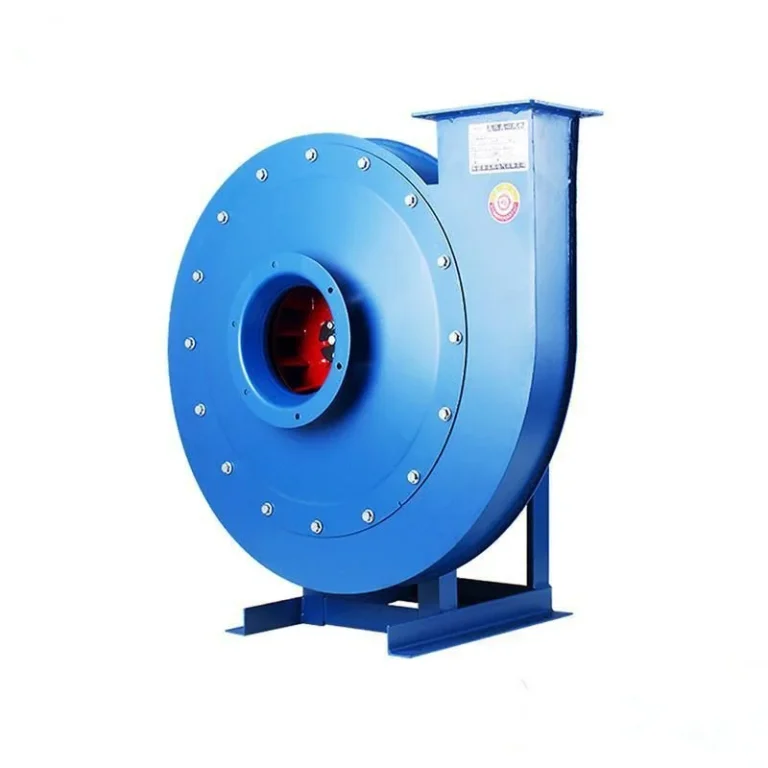
In our own range the boundary is around 1,500 to 2,000 Pa. Below that, units are fans in the ordinary sense: ventilation, ducted supply, cabinet cooling. Above it, the design shifts towards pressure, and the products look different.
The high pressure centrifugal fan for process air is the clearest example, reaching 9,149 Pa with impellers from 3.15A to 6.3A machine numbers. At the other end, the low noise AC centrifugal blower is what most people mean by a blower in the small-equipment sense: compact, pressure-biased, quiet.

The classic case is a replacement order. A plant has a centrifugal blower that has run for twelve years, the nameplate has worn, and the maintenance engineer orders a fan of the same airflow from a different supplier. It arrives, bolts into the same frame, and delivers 30 percent less air. Nothing is defective. The original unit was a pressure-biased blower selected at 1,800 Pa, and the replacement was a general purpose fan whose curve was measured at 600 Pa.
The same thing happens in reverse on tender documents, where a consultant specifies a blower and receives a fan that meets the airflow but not the pressure, and the argument is settled months later by comparing duty points that neither party wrote down at the start.
Stop relying on the noun. A specification that cannot be misread contains five items, and any two suppliers quoting against it will quote comparable machines.
Add the standard the unit must meet, and the word fan or blower becomes irrelevant. That is the real lesson: the terminology is ambiguous, the numbers are not.
Yes. They describe the same machine. Blower tends to be used when the duty is pressure-biased, but the construction, the impeller type and the casing are the same family of hardware.
A rotary blower traps a fixed volume of air per revolution, so flow stays nearly constant as pressure rises. A centrifugal fan accelerates air and converts velocity into pressure, so flow falls as resistance rises. They are different machines for different duties.
A rotary blower is usual for wastewater aeration because the water column imposes a pressure that changes with level, and constant flow matters more than efficiency. A centrifugal unit is used where the pressure is lower and more stable.
Not in practice. Both complete centrifugal fans and centrifugal blowers classify under 8414.59 in most schedules. The classification depends on whether the unit is complete and on its power rating, not on the marketing term.
Because buyers search both. It is a search convention rather than a technical one, and it is the reason a specification should always be written in numbers rather than in nouns.