How to Buy a Centrifugal Fan Without Getting Burned
Published: Author: wilmall
Buying a centrifugal fan is a specification exercise, not a shopping exercise. It looks like shopping because the search results are full of product pages with prices, but almost none of those listings can tell you what the unit will do in your system. The units that look comparable are often not, and the difference only shows up when the filter loads or the duct goes in.
This page is the checklist we would want a buyer to run before sending a purchase order, whether the supplier is us or anyone else. It is written from the supplier side of the table, which is why it includes the questions that tend to make a sales engineer go quiet.
Why the obvious search results are the wrong place to start
Search for a centrifugal fan for sale and you will surface three kinds of listing. Residential and light commercial fans from big box retailers, which are almost never true centrifugal units and never sized for duct resistance. Generic trading listings with an airflow figure and a price but no curve. And a small number of manufacturers who ask you for duty data first.
The big box route is the trap. A unit bought from a general retailer is typically an axial or a small forward curved fan rated at free air, and free air ratings collapse the moment you connect duct. Buyers who go that route for a workshop extractor usually end up buying twice.
Check one: the duty point, not the headline airflow
Ask for airflow and static pressure together, at the operating point, and ask what resistance that figure assumes. A fan rated 1,000 m3/h at 0 Pa and a fan rated 1,000 m3/h at 600 Pa are not comparable products. The second one can be three times the machine.
If the answer is a single airflow number with no pressure, stop there. Nobody who builds centrifugal fans quotes that way, because the number would be meaningless.
A real quote shows a row of duty points, not one airflow figure. If the pressure column is missing, the airflow column is decoration.
Check two: a curve or a table, with the test basis stated
Either is acceptable. A curve is easier to read; a table is harder to fake. What matters is whether the numbers come from a test on that model family or from a catalogue copied between suppliers. Ask whether the unit will ship with a performance test record. A supplier who tests every unit will say yes without hesitation.
Check three: the motor, in detail
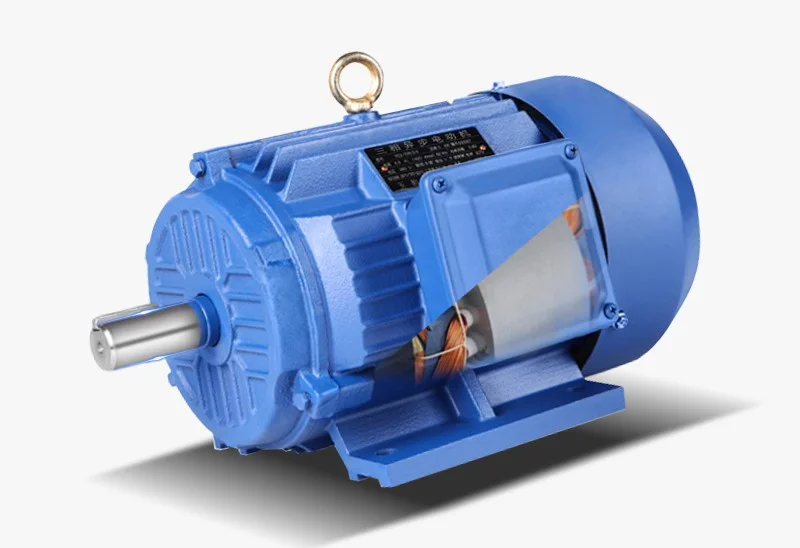
Four questions. Is the rated output at the ambient the fan will actually see, or at 25 degrees? Is it a genuine rated motor or a derated unit relabelled? What is the insulation class and the IP rating? Is the motor a recognised brand with local availability, or a house brand that cannot be replaced in the destination country?
For export orders the ambient question matters more than buyers expect. A motor rated at 40 degrees ambient loses roughly 10 to 15 percent of its usable output compared with one rated at 25 degrees, and a fan selected at the margin will run hot in a Middle East plant room.
Check four: impeller balance grade
Ask for the balance grade in writing. G6.3 is the usual commercial standard and is acceptable up to about 3,000 r/min. Above that, G2.5 is common for better units. An unbalanced impeller does not fail immediately; it wears bearings, loosens fasteners and produces a low frequency rumble that gets blamed on the ductwork.
Check five: bearings, by name
“NSK or equivalent” is not a specification. Ask for the brand, the series and the housing type. On a belt driven unit the bearing pedestal is the single most maintenance-sensitive part of the machine, and a cheap pedestal with unbranded bearings is the most common reason a fan is replaced early.
Check six: casing thickness and construction
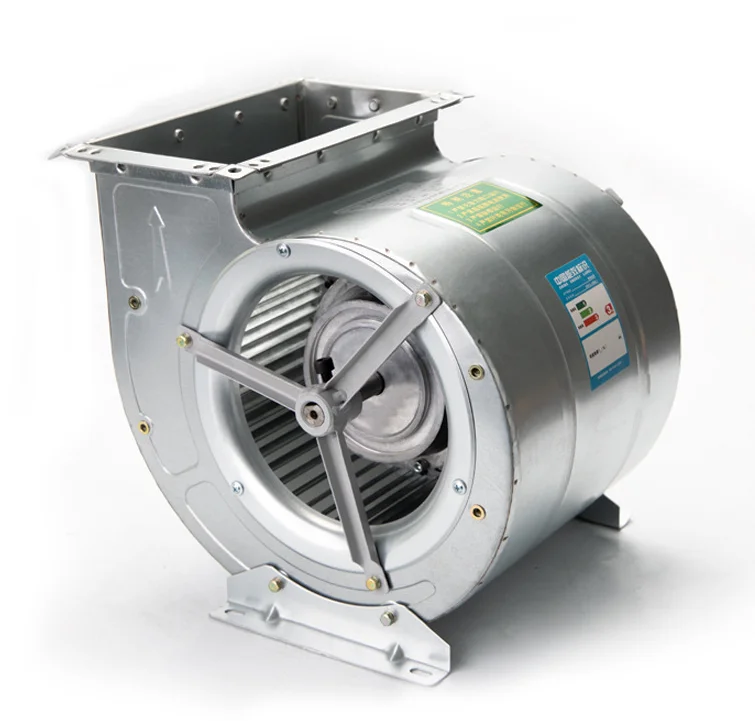
State the plate thickness in millimetres. A casing built from 1.2 mm sheet and one built from 2 mm sheet look identical from a photograph and behave very differently under negative pressure and vibration. Ask whether the casing is continuously welded or spot welded at the seams, because that decides whether it leaks dust into the plant room after two years.
Seam construction and plate thickness are the two things a photo cannot tell you. Ask for both in the datasheet.
Check seven: what is included and what is not
Confirm the scope item by item. Flexible connectors, isolation mounts, a damper, a starter or drive, a weatherproof terminal box, a drain plug on the low point of the casing, and a spare bearing set. These are routinely left out of a first quote to make the price look better, then appear as extra lines later. Our fan accessories page lists the guards, filters and covers that are usually missing from a first offer, and it is worth checking an offer against that list before comparing totals.
A fan that arrives without the right conformity documents is a fan that sits at the port. Confirm the certificate before ordering.
Check eight: certification for the destination
CE and an EU declaration of conformity for Europe, UKCA where applicable, SASO and SABER for Saudi Arabia, SNI for Indonesia, SONCAP for Nigeria, EAC for the Eurasian union. For explosion-proof units, ATEX or IECEx with the exact model named on the certificate. Our certification page lists the documents we hold, and the quality assurance process describes what is tested before packing.
Confirming this before ordering is not bureaucracy. A fan without the right conformity documents can sit at the port at the buyer’s cost, and the certificates cannot be produced retroactively for a model that was never tested.
Check nine: the commercial terms
Lead time from deposit, not from enquiry. Incoterm and named place. Packing dimensions and gross weight, which for a large fan matter as much as the price. Warranty period and what it covers, particularly whether bearings and motor are included. And spare parts availability, with the answer in years rather than “long term”.
What to put in the request for quotation
A good RFQ gets a good quote. Ours ask for ten items, and when a buyer supplies all ten the quote is usually right first time.
Airflow required, in m3/h or CFM, at the operating point.
Static or total pressure required, in Pa or inWG, and which of the two.
Air temperature, maximum and normal.
Air condition: clean, dusty, greasy, corrosive, explosive.
Voltage, phase, frequency and available control method.
Mounting position and available space, with a sketch if possible.
Noise limit at a stated distance, if there is one.
Destination country, for certification and voltage.
Quantity and expected annual volume, which changes the price.
Any standard the unit must meet, such as an ATEX zone or a marine class.
Two offers, compared properly
Put the two quotations side by side on a single sheet with eleven rows: airflow at duty, static pressure at duty, absorbed power, motor rating and ambient basis, impeller balance grade, bearing brand, casing plate thickness, drive arrangement, included accessories, certification held, and delivery from deposit. Fill in both columns. In our experience the cheaper offer has at least three empty or vague cells, and those three cells are the price difference.
This exercise also protects the buyer in the other direction. A supplier quoting a heavier unit at a higher price can point to exactly where the extra money went, which is a far better position than arguing about a total.
Total cost, not purchase price
The cheapest centrifugal fan is rarely the cheapest installation. A unit that draws 15 percent more power runs up a bill every month for fifteen years. A unit with a poor impeller balance eats bearings every two years. A unit without documentation costs a week of engineer time when it is inspected or when a spare is needed.
Our centrifugal fan range is quoted against that list, and the high pressure process fan page shows the level of duty detail we publish, because a buyer who can compare at that level is a buyer who does not come back with a problem two months later.
Most ventilation duties sit here: a centrifugal fan in a duct run, nowhere near the pressure where a lobe blower would be needed.
Frequently asked questions
Where can I buy a centrifugal fan in small quantities?
Directly from a manufacturer. Most industrial centrifugal fan makers have no meaningful minimum for standard models, and buying direct usually costs less than a distributor while giving access to the technical data a distributor will not have.
Are centrifugal fans sold at Lowes or Home Depot suitable?
Almost never for ducted or industrial work. Retail listings are residential ventilation products rated at free air, without a fan curve and without the pressure capability to overcome filters or long duct runs.
How long does delivery take?
Standard models typically ship in two to four weeks from deposit, with sea freight adding three to six weeks depending on destination. Special impellers and high temperature units take longer because of material lead times, and the exact figure belongs in the quotation.
Should I buy a spare impeller with the first order?
For critical duty, yes. An impeller is the longest lead item on the machine, and a spare on the shelf turns a two month outage into a two day maintenance job. For non-critical units, a spare bearing set is usually enough.
What is a reasonable warranty on a centrifugal fan?
Twelve months from commissioning or eighteen from shipment is typical. Anything shorter should be questioned, and anything longer should be checked for what it excludes, because bearings and motors are usually the parts that fail and are often excluded.
Forward curved, backward curved, radial and aerofoil impellers behave very differently. A practical breakdown of centrifugal fan types and how to pick one.