Centrifugal Fan HS Code: How 8414.59 Is Classified
Published: Author: wilmall
Most centrifugal fans ship under HS heading 8414.59, the subheading for fans other than table, floor, wall, window, ceiling or roof fans with a self-contained electric motor of 125 W or less. That is the short answer. The longer answer is that the correct code depends on three things the customs broker will ask about: how the unit is presented, what drives it, and how much pressure it develops.
Getting this wrong is not a paperwork nuisance. A wrong code can mean a different duty rate, a different inspection channel and, in markets with mandatory certification, a consignment that sits at port while the importer argues with the authority. This page sets out how the classification actually works for centrifugal fans, using the same logic a customs classifier applies.
The heading structure in plain terms
Chapter 84 covers machinery with individual functions. Heading 8414 is specifically air or gas pumps, compressors and fans, and it sits inside a group of headings that were designed around function rather than around the industry using the equipment. Within 8414, the split that matters for a fan supplier is this:
Code
What it covers
Typical product
8414.51
Table, floor, wall, window, ceiling or roof fans, self-contained motor 125 W or less
Domestic and light commercial fans
8414.59
Other fans
Industrial centrifugal fans, duct fans, axial fans above 125 W
8414.59.10 to .90
National subdivisions of 8414.59
Varies by country, see below
8414.80
Other pumps, compressors and fans not elsewhere specified
Some multi-stage and special units
8501
Electric motors, separate
A motor shipped on its own
Two boundaries cause most of the disputes. The first is the 125 W threshold: a small cabinet centrifugal blower rated at 60 W and built as a self-contained unit with its own housing can fall into a different subheading than the identical blower rated at 150 W. The second is whether the motor is inside the unit or supplied loose.
Why the 125 W line matters more than it should
Our smallest duct centrifugal fan, the GDF100, draws 60 W. The GDF315 draws 225 W. Physically they are the same product family, same shape, same application. In classification terms they sit on opposite sides of a threshold, and the subheading changes with it. That is not an error in our catalogue or in the customs tariff; it is how the schedule was written, and it is why the technical data sheet has to travel with the commercial invoice.
In practice, most industrial centrifugal fans are well above 125 W and land in 8414.59 without argument. The threshold question only becomes live for small blowers, and for those the safest course is to declare the actual rated input power from the nameplate rather than a nominal figure.
The same logic applies to the airflow figure. Customs does not classify on airflow, so a customs officer comparing a 1,200 m3/h unit and a 3,800 m3/h unit will look for the nameplate power and the physical description first. Having both numbers on the data sheet in the units used by the destination market prevents a routine query from becoming a two week delay.
The nameplate power, not the airflow, is what decides the subheading for small centrifugal fans.
Self-contained unit or fan to be assembled into a machine
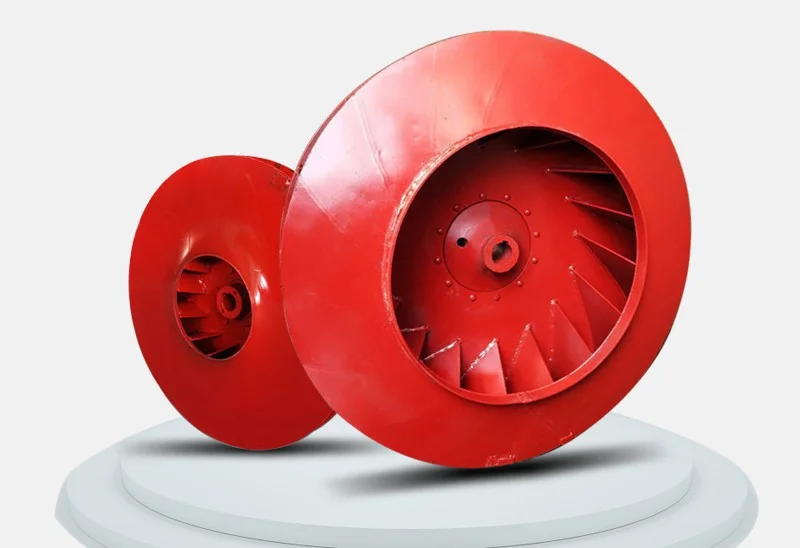
This is the classification question that costs the most money when it is got wrong. A centrifugal fan supplied as a finished unit with its own casing, motor, base and terminal box is a fan of 8414. A centrifugal impeller and casing supplied as a subassembly to be built into an air handling unit, a drying oven or a chiller is still normally classified as a fan part, but the importer may be able to claim the assembly under the heading of the machine it belongs to, depending on the destination’s rules and on how complete the subassembly is.
The practical rule: describe what is in the box, on that shipment, not what it will become. If the shipment contains an impeller, a shaft, bearings and a bare casing without a motor, it is not a complete fan, whatever the purchase order calls it.
National subdivisions you will actually meet
Ten-digit national codes differ, and buyers in our main markets ask for these constantly. The pattern below reflects how the subheadings are commonly structured; the exact eight or ten digit code must always be confirmed with a broker in the destination country, because tariff lines get amended between revisions.
United States. HTS 8414.59.6540 and neighbouring lines cover industrial fans; 8414.59.6590 catches other fans. The statistical suffix depends on whether the unit is a centrifugal or axial type and on its power rating.
European Union. 8414 59 00 is the base CN code for other fans. The TARIC suffix depends on motor power and application.
Indonesia. HS 8414.59.90 is the usual landing point for industrial centrifugal fans, with an import licence and SNI obligations on some categories.
Saudi Arabia and the GCC. 8414.59.00 under the unified GCC tariff, with SABER and SASO conformity handled separately from the tariff line.
Poland. Uses the EU CN code directly; the customs declaration is filed as 8414 59 00.
Nigeria and much of West Africa. Follows the ECOWAS common external tariff on 8414.59, with SONCAP certification as the practical gate.
Where buyers go wrong
Three patterns show up repeatedly in the documents we see. The first is declaring every fan on a mixed shipment under one code because the invoice is simpler that way; customs systems do not care about invoice simplicity and will split the consignment at inspection. The second is using the code for a fan motor for a complete fan, which usually passes but shifts the duty and can trigger a valuation query. The third, and the most expensive, is copying the code from a previous shipment of a different product line.
A clean declaration has three documents behind it: a technical data sheet showing rated power and airflow, a drawing or photo showing the unit is complete, and an invoice description that matches both. When those three agree, classification is nearly always settled at the desk.
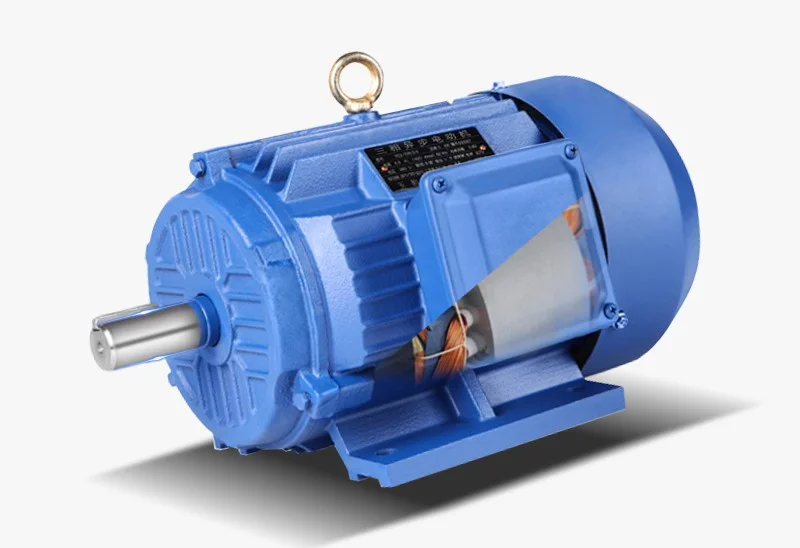
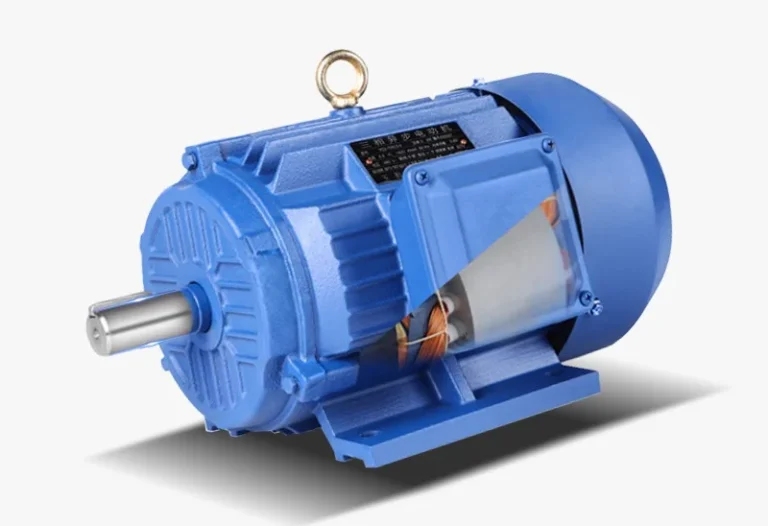
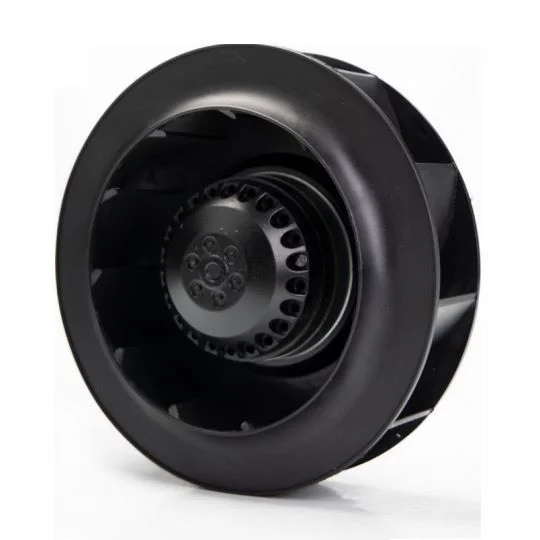
One photograph showing casing, motor and terminal box ends most questions about whether the goods are a complete fan.A complete fan assembly with motor, base and terminal box. Photographs like this settle most classification questions at the desk.
Certification is a separate question
The HS code decides duty. It does not decide whether the product may enter. Those are parallel tracks and confusing them is a common cause of delay. A fan can be correctly classified and still be refused because the conformity assessment was not done.
For our main markets the parallel requirements are CE marking with an EU declaration of conformity for Europe, UKCA for the United Kingdom where applicable, SASO and SABER for Saudi Arabia, SNI for Indonesia, SONCAP for Nigeria, and EAC where the destination is in the Eurasian customs union. Explosion-proof units add ATEX or IECEx certification on top, and that certificate must name the exact model, not just the family.
If a purchase order specifies an explosion-proof centrifugal fan for a classified area, the ATEX certificate number belongs on the invoice alongside the HS code. Our explosion-proof fan range and the certification page carry the current document set, and the quality assurance process describes the routine tests each unit goes through before packing.
How we document a shipment
Every export order from our centrifugal fan range leaves with a document pack that includes the commercial invoice with model level descriptions, the packing list, the technical data sheet for each model, and a declaration of origin. For high pressure units such as the process air fan we add the performance test record, because the pressure figure is the reason the unit was bought and the buyer’s engineer will want to see it.
That pack is not bureaucracy. It is what makes a classification defensible six months later, and what lets a broker argue for a ruling instead of accepting the first assessment offered.
Frequently asked questions
What is the HS code for a centrifugal fan blower?
8414.59 in most cases, since the unit is a fan other than the household types listed in 8414.51. Small self-contained blowers of 125 W or less may fall under 8414.51 instead. The national eight or ten digit suffix depends on the destination country.
Does an explosion-proof fan use a different HS code?
Usually not. The heading is determined by what the machine does, not by its certification. An ATEX or IECEx explosion-proof centrifugal fan normally remains in 8414.59, with the certification carried as a separate conformity document rather than a separate tariff line.
Is a fan part classified differently from a complete fan?
Yes. An impeller, casing or bare shaft assembly shipped without a motor is a part, and parts of fans have their own subheading under 8414.91 in many schedules. Ship a complete unit with a motor and it is a fan.
Can I use one HS code for a mixed container of fans?
Only if every item genuinely falls in the same subheading. Mixed power ratings and mixed product families usually cannot share a line, and splitting the invoice by model is the safer approach even though it takes longer to prepare.
Does the HS code change if I buy under OEM terms?
No. Branding does not affect classification. The tariff line follows the physical characteristics of the goods, which is why an OEM unit and our own branded unit of the same model declare identically.
Nine checks that separate a fan that runs for fifteen years from one that fails in a season, plus what big-box listings never tell you about duty points.
Forward curved, backward curved, radial and aerofoil impellers behave very differently. A practical breakdown of centrifugal fan types and how to pick one.