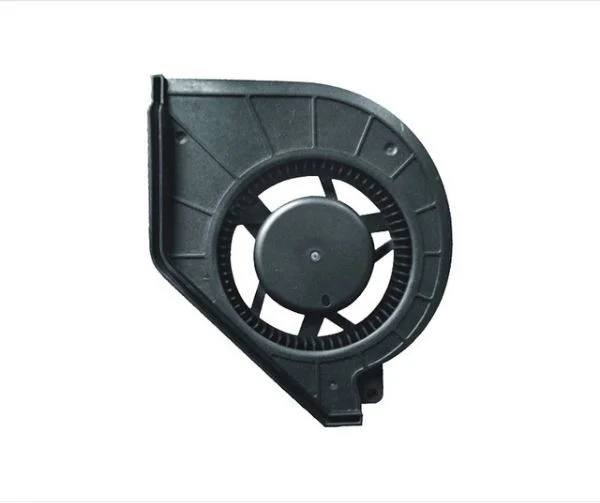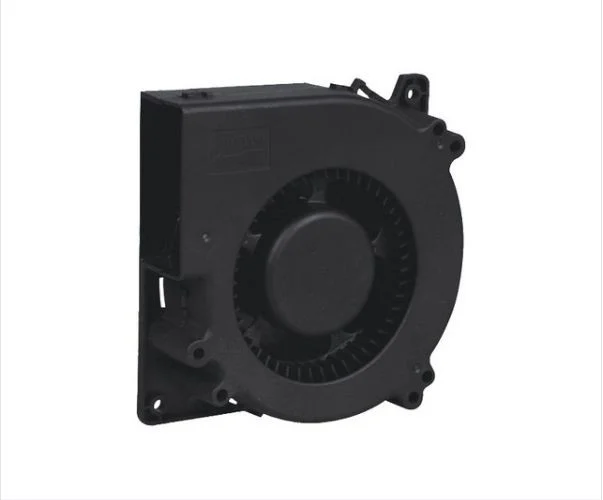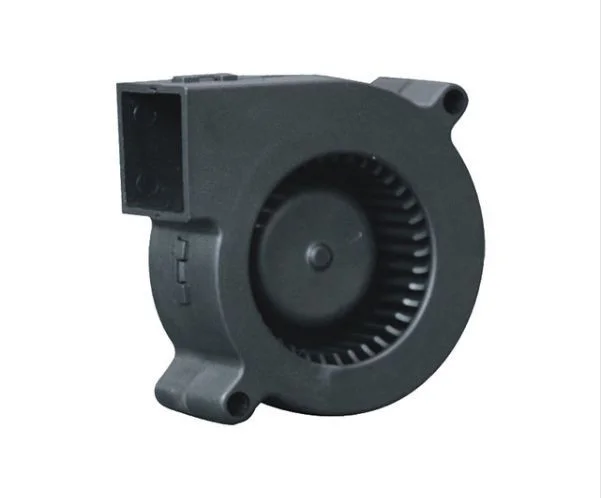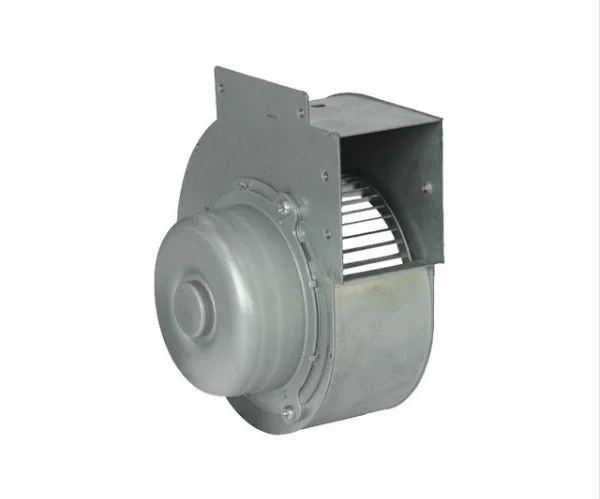
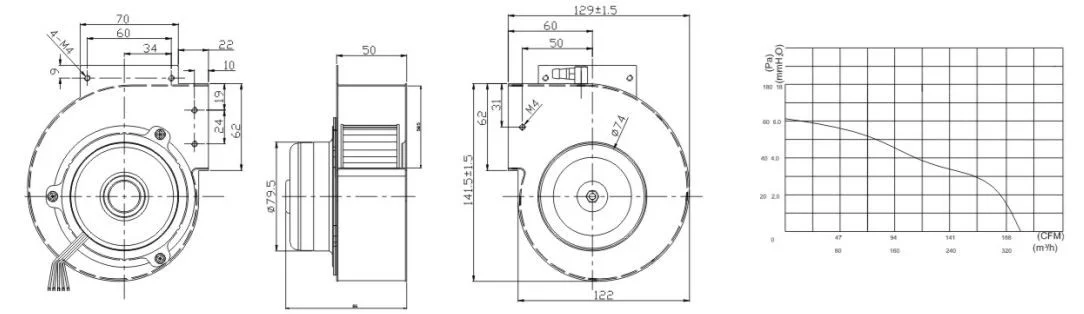
Overview
A compact blower for enclosures where the heat sits in one place. Instead of stirring the whole volume, it delivers air to the heatsink or the component that needs it, which is often more effective in a small housing.
The range covers 12 V and 24 V variants. Because the outlet is narrow, the mounting position and the distance to the target surface matter as much as the airflow rating.
Where it fits
- Small electronics enclosures
- Heatsink-directed cooling
- Compact power supplies
- Sealed compartments with an internal channel
Specifications
| Model | Bearing System | Voltage (V) | Voltage Range (V) | Current (A) | Power (W) | Speed (RPM) | Moise (dBA) | Air Flow | Static Pressure | ||
|---|---|---|---|---|---|---|---|---|---|---|---|
| m3/h | CFM | Pa | mmH2O | ||||||||
| TD924024HB-K | Ball | 24VDC | 20-28 | 1.35 | 32.4 | 3000 | 60 | 170 | 100 | 200 | 20 |
Selection and installation notes
Keep the outlet close to the target. A short, smooth transition preserves pressure; a wide gap loses it.
Check the recirculation path. Air delivered to a heatsink has to leave the compartment, or it only moves heat around.
FAQ
How close should the outlet be to the heatsink?
As close as the layout allows without touching. A short duct or a shroud keeps the pressure where it is useful.
Is it quieter than an axial fan?
Not necessarily at the same airflow. It is chosen for directed pressure, not for quiet.
Can it run continuously?
Yes with ball bearings. Sleeve bearings suit intermittent, cooler, horizontal use.
Which voltage should I choose?
The rail you already have. At the same power, 24 V draws less current than 12 V.
Request Quote
Interested in this product? Share your requirements or questions using the form.
-
Your requirements
Include the specifications, options, or quantity you need, if known.
-
Your questions
Ask about product details, availability, or order information.
-
Your contact details
Leave an email address where you can receive a reply.